
The Truth About Crawling
Explained by Pediatric Physical Therapist
Dr. Stella Kandyba, PT, DPT
Many parents hear that crawling is optional. Some are told that if a baby walks on time, everything is fine, even if crawling was skipped. While this idea is common, research and clinical experience suggest that early movement experiences play an important role in how babies learn, move, and interact with the world.¹
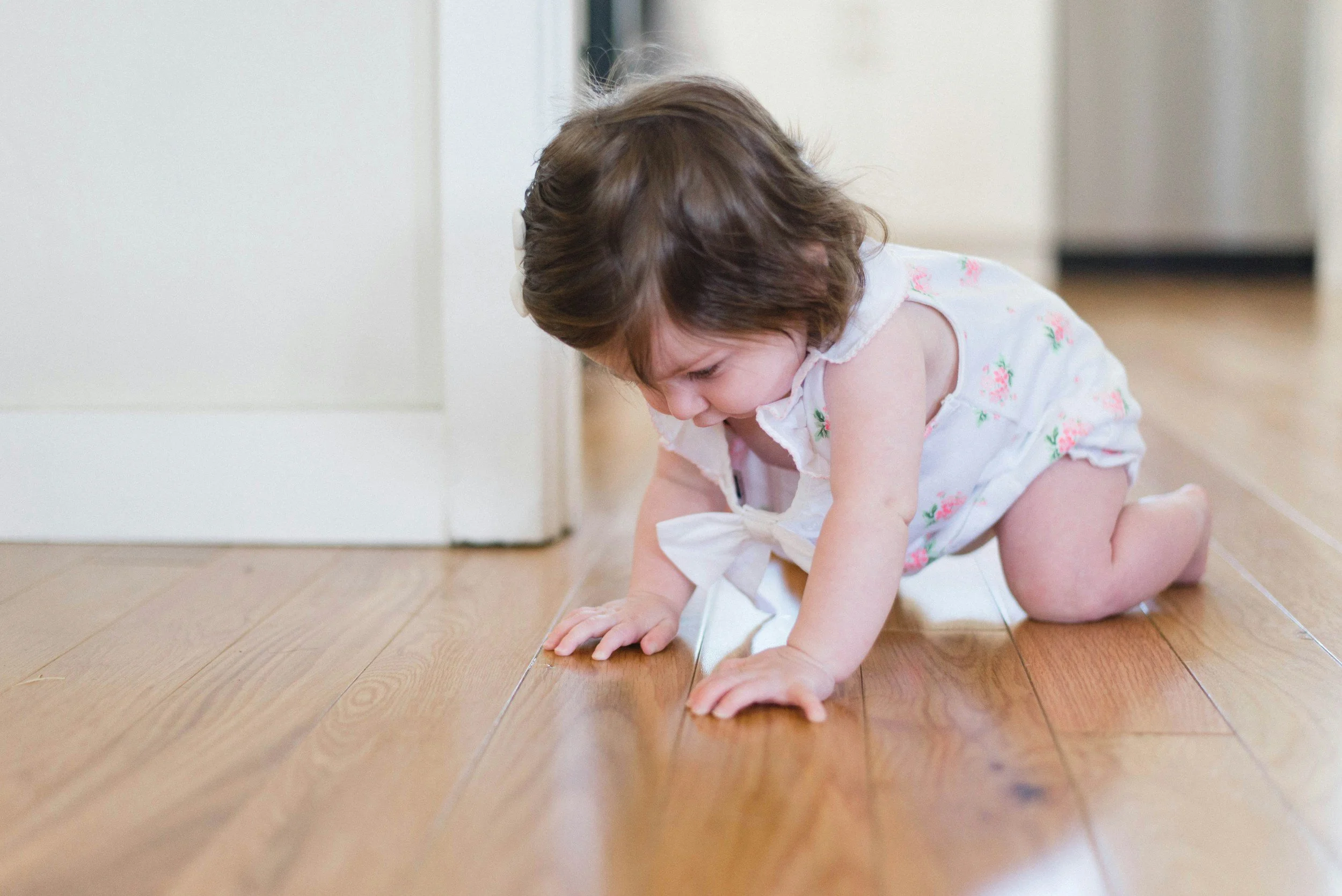
Why Early Movement Matters
Early independence supports learning
Before babies can walk, crawling gives them the very desired independence. Being able to move on their own lets babies explore, reach what interests them, and begin understanding cause and effect. Early independent movement supports learning and thinking by giving babies more chances to interact with people, objects, and their environment.²
The brain and body learn to work together
Moving on hands and knees uses both sides of the body in a coordinated way. This helps organize the brain and nervous system and supports early coordination. This type of movement lays the foundation for later skills such as balance, attention, and complex motor tasks.⁵
Physical Benefits Parents Don’t Always See
Strength and joint development
Floor movement builds deep core strength and supports healthy development of the hips, knees, shoulders, and joints. Early hands-and-knees movement helps muscles and joints learn to work together efficiently, preparing the body for standing and walking.⁴
Strong hands for future skills
Supporting body weight through the hands helps develop hand arches and strengthens the wrists and fingers. These early skills are important for later fine motor tasks such as holding crayons, using scissors, writing, and managing buttons and zippers.⁶
Vision, Balance, and Body Awareness
Seeing and understanding the world
Movement close to the ground changes how babies see their surroundings. Babies who move independently develop visual skills such as depth perception and visual tracking. This movement also stimulates the balance system and supports body awareness, breathing efficiency, and endurance.³⁷
Bottom line:
Crawling helps build the foundation for everything that comes next. While some babies may skip it and still walk, crawling gives the brain and body critical experiences that support strength, coordination, learning, and confidence. Because we can’t predict which children may struggle later, encouraging crawling gives every baby the best possible start.
Frequently Asked Questions
What if my baby doesn’t like tummy time?
Start with short, frequent opportunities and follow your baby’s cues. Tummy time does not have to be flat on the floor. Babies can work on these skills on your lap, over your shoulder, or supported on pillows. Even brief periods spread throughout the day help build strength, comfort, and tolerance for floor movement.
My baby wants to stand. Should I stop that?
Not exactly but it’s important not to promote standing too early. Standing is a normal part of development, but babies benefit most when they first build strong floor skills. Encourage plenty of time on the floor and opportunities to crawl before focusing on standing and walking. This helps ensure the body and brain are ready for upright movement.
What If My Baby Skips Crawling?
Some children skip this stage and appear to do well. However, we can never know with certainty which children may develop challenges later with coordination, posture, fine motor skills, or learning. Because early movement influences many areas of development, many pediatric therapists recommend encouraging hands-and-knees movement so every baby has the strongest possible foundation.¹
When should I be concerned?
If your baby avoids floor movement, shows uneven use of arms or legs, or skips crawling completely, a physical or occupational therapy evaluation can be helpful.
How We Can Help
If you’re unsure whether your baby is getting enough floor time or moving efficiently, our pediatric therapy team can help. A developmental screening or consultation can provide reassurance or early support when it matters most.
References

More from the Truth About… series: